
WWDC 2026 : Is the promised next generation actually good ?

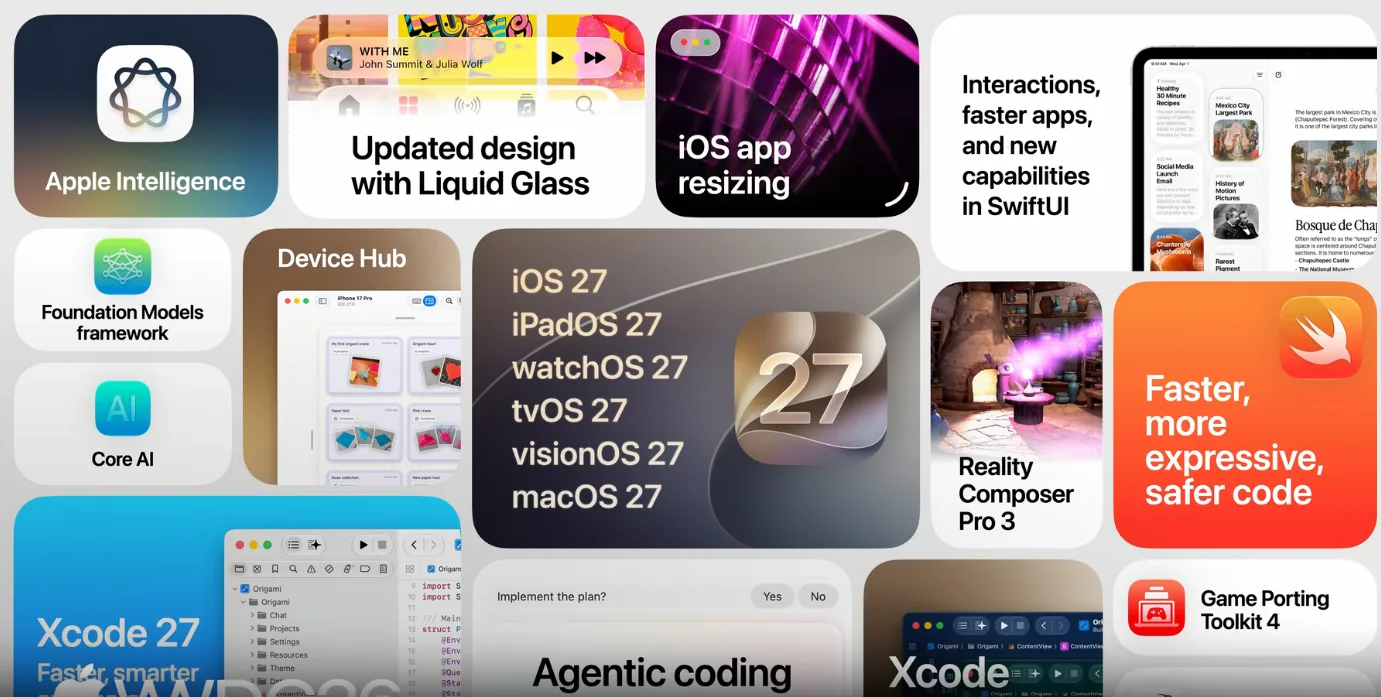
For years, Apple has been selling a vision of the future.
A future where your devices understand you better. Where technology feels more personal. Where powerful AI works quietly in the background instead of demanding your attention.
At least, that’s the promise.
The challenge is that while Apple talked about the future, the rest of the industry moved fast.
Google introduced Gemini across its ecosystem. OpenAI turned ChatGPT into a household name. Microsoft embedded AI into Windows and Office. Suddenly, Apple looked less like the company leading innovation and more like the company trying to catch up.
That’s why WWDC 2026 mattered so much.
This wasn’t just another software update event. It was Apple’s chance to prove it has a serious place in the AI era.
The company unveiled major updates to Apple Intelligence, Siri, iOS, macOS, and developer tools. But flashy announcements are one thing. Real-world usefulness is another.
So, did Apple finally deliver on its next-generation vision?
Or is it still playing catch-up while competitors race ahead?
Let’s break it down.
Why WWDC 2026 Was Different
Every WWDC introduces new software features.
This year felt different.
The pressure on Apple was unlike anything the company has faced in years.
The conversation was no longer about which operating system looked better.
It was about artificial intelligence.
Consumers wanted answers to some very specific questions:
- Is Siri finally useful?
- Can Apple Intelligence compete with ChatGPT and Gemini?
- Is Apple falling behind in AI?
- Does Apple still have the ability to shape the future of technology?
WWDC 2026 wasn’t simply about showing new features.
It was about rebuilding confidence.
The Biggest Announcements From WWDC 2026
Before analyzing whether Apple’s vision is working, let’s look at what the company actually announced.
Apple Intelligence Takes Center Stage
If there was one theme that defined WWDC 2026, it was Apple Intelligence.
Unlike last year, Apple spent far less time explaining what AI could do and much more time demonstrating how it fits into everyday experiences.
Apple Intelligence now plays a bigger role across:
- Siri
- Messages
- Photos
- Safari
- Notes
- Calendar
- System-wide actions
The goal is simple.
Instead of opening apps and manually performing tasks, your device increasingly helps organize information and complete actions for you.
What This Means for You
In theory, your iPhone becomes less reactive and more proactive.
Instead of waiting for commands, it understands context and assists automatically.
That’s the future Apple is trying to build.
Siri Finally Gets a Major Upgrade
Let’s be honest.
Siri has been the punchline of technology jokes for years.
While competitors launched increasingly capable AI assistants, Siri often struggled with basic requests.
WWDC 2026 was Apple’s attempt to change that perception.
The new Siri focuses on:
- Better contextual understanding
- More natural conversations
- Cross-app actions
- Personal awareness
- Improved memory of previous interactions
For example, Siri can now understand information from multiple apps and help complete tasks without forcing you to switch between them manually.
The Good News
This is the most capable Siri Apple has ever shown.
The Bad News
It still doesn’t clearly outperform the best AI assistants available today.
And that’s an important distinction.
Apple has improved Siri significantly.
Whether it has truly caught up remains a more complicated question.
iOS 27 Becomes More Intelligent
Many of the most noticeable WWDC features arrived through iOS 27.
Rather than introducing dramatic visual changes, Apple focused on making everyday interactions smarter.
Some of the biggest improvements include:
- Smarter notifications
- AI-assisted writing tools
- Better search experiences
- Improved photo organization
- Context-aware suggestions
- More powerful shortcuts and automation
These are not flashy features.
They’re practical ones.
And in many cases, practical improvements matter more than dramatic announcements.
What You’ll Actually Notice
Most users will not spend their day thinking about AI.
They will simply notice that common tasks require fewer steps.
That is where Apple’s approach differs from many competitors.
macOS Expands Apple’s AI Vision
WWDC 2026 also brought significant updates to macOS.
Apple wants the Mac to become more than a productivity machine.
It wants it to become an intelligent workspace.
Key improvements focused on:
- Workflow automation
- Smarter search
- Enhanced productivity tools
- Better integration with Apple Intelligence
- Improved developer experiences
For professionals, students, and creators, these changes could be some of the most valuable announcements from the entire event.
The Developer Story Most People Missed
Most consumers focus on iPhones and Siri.
Developers pay attention to something else.
Tools.
WWDC 2026 introduced new AI frameworks, Foundation Models access, and development tools designed to help app creators integrate intelligence into their own applications.
This matters because developers ultimately determine how powerful Apple’s ecosystem becomes.
The best AI experience isn’t built by Apple alone.
It is built by millions of developers creating applications on top of Apple’s platform.
In many ways, this may become one of the most important announcements from the entire event.
What Apple Got Right
Not every company is approaching AI the same way.
Apple’s strategy stands out for several reasons.
Privacy Still Comes First
One of the biggest concerns surrounding AI today is privacy.
People increasingly wonder:
- Who can access my data?
- Where is my information stored?
- How much does AI know about me?
Apple’s answer remains largely consistent.
Privacy is the foundation.
How Apple Differs
Focus Area | Apple | Google | OpenAI |
|---|---|---|---|
Privacy | High Priority | Important | Important |
On-Device Processing | Extensive | Limited | Limited |
Cloud Dependence | Lower | Higher | Higher |
Ecosystem Integration | Very High | High | Moderate |
Apple continues to emphasize processing information directly on your device whenever possible.
For many users, this may be one of Apple’s strongest competitive advantages.
Apple Is Making AI Feel Invisible
Most AI companies want you to interact with AI directly.
Apple is taking a different approach.
The company wants AI to disappear.
That may sound strange.
But think about how most people use technology.
They don’t wake up wanting to use AI.
They want to:
- Send messages
- Edit photos
- Organize schedules
- Find information
- Complete tasks
Apple’s goal is to make those experiences better without constantly reminding you that AI is involved.
This philosophy may prove more important than many people realize.
The Ecosystem Advantage Is Still Real
Apple’s greatest strength has never been a single device.
It is the ecosystem.
iPhone works with your Mac.
Mac works with your iPad.
Your Apple Watch works with all of them.
Apple Intelligence now extends across that ecosystem.
This creates experiences that are difficult for competitors to replicate.
And it remains one of Apple’s biggest advantages moving forward.
Where Apple Still Falls Behind
WWDC 2026 was impressive.
But it wasn’t perfect.
Siri Still Has Something to Prove
Apple deserves credit for improving Siri.
The assistant is more capable than ever before.
Yet many users will inevitably compare it to:
- ChatGPT
- Gemini
- Claude
And that comparison is not always favorable.
While Siri is becoming smarter, competitors still lead in several areas:
- Complex reasoning
- Long-form conversations
- Knowledge depth
- Problem-solving capabilities
The gap is smaller.
But it has not disappeared.
Apple Is Still Playing Catch-Up
One reality remains difficult to ignore.
Apple entered the AI race later than many competitors.
While others spent years training users to embrace AI assistants, Apple focused on refining products and protecting privacy.
That strategy has benefits.
But it also created challenges.
WWDC 2026 showed progress.
It did not prove Apple is leading.
At least not yet.
The AI Choice Problem
One interesting issue received surprisingly little attention.
Choice.
Today, most users can choose between:
- ChatGPT
- Gemini
- Claude
- Copilot
But inside Apple’s ecosystem, options remain relatively limited.
As AI becomes more central to everyday life, users may increasingly expect freedom to choose their preferred assistant.
Apple will eventually need to decide how open it wants its AI ecosystem to become.
The Bigger Story: Apple’s AI Strategy Is Completely Different
This may be the most important takeaway from WWDC 2026.
Apple is not trying to build the smartest AI.
At least not in the same way as its competitors.
Instead, Apple is trying to build the most trusted AI.
Three Different Visions of AI
Apple | Google | OpenAI |
|---|---|---|
Privacy-first | Information-first | Model-first |
Device-first | Cloud-first | Cloud-first |
Invisible AI | Visible AI | Visible AI |
Ecosystem-focused | Search-focused | Assistant-focused |
This explains many of Apple’s decisions.
The company is not competing solely on intelligence.
It is competing on trust, integration, and user experience.
WWDC 2026 Was Really About Trust
When you look beyond the features, a clear pattern emerges.
Apple repeatedly emphasized:
- Privacy
- Security
- Transparency
- On-device processing
- User control
This was not accidental.
Apple understands that AI adoption depends on trust.
Many people remain uncomfortable with how AI companies collect and use information.
Apple sees that concern as an opportunity.
The company’s bet is simple:
People may not choose the smartest AI.
They may choose the AI they trust most.
WWDC 2026 showed that Apple is doubling down on that strategy.
What WWDC 2026 Means for Different People
If You’re an iPhone User
You will likely notice:
- Better Siri interactions
- Smarter daily workflows
- Improved productivity
- More personalized experiences
The changes may feel subtle.
But subtle improvements often have the biggest long-term impact.
If You’re a Student
AI tools are becoming essential for learning and organization.
Apple’s updates could help with:
- Note-taking
- Scheduling
- Research
- Writing
- Productivity
The focus is less on replacing your work and more on helping you work faster.
You might be a Creator
Content creation increasingly relies on intelligent tools.
Apple’s ecosystem improvements may streamline:
- Editing
- Organization
- Workflow management
- Idea generation
The benefits may be especially noticeable for creators already invested in Apple’s ecosystem.
For a Developer
WWDC 2026 may be one of the most important Apple events in years.
New AI frameworks and development tools create opportunities to build entirely new categories of applications.
For developers, the biggest story was not Siri.
It was the platform underneath it.
Conclusion: Apple’s Future Depends on More Than AI
The biggest lesson from WWDC 2026 is not that Apple added more AI.
Every major technology company is doing that.
The real story is that Apple is trying to redefine what AI should feel like.
While competitors focus on building increasingly powerful models, Apple is focused on building experiences that feel natural, private, and useful.
Whether that strategy succeeds remains to be seen.
But WWDC 2026 made one thing clear.
Apple is no longer sitting on the sidelines of the AI revolution.
The company has entered the race.
And its vision for the future may look very different from everyone else’s.
Read next

Flipkart vs Amazon: The Better Phone Sale for Your Money?
Amazon's sale starts 8 Oct, Flipkart's 9 Oct. Compare the Big Billion Days vs Great Indian Festival bank offers and phone deals before you buy.
The Surprising Reasons Smartphone Prices Are Surging in 2026
Smartphone prices rising in 2026 is no accident. Memory chips now cost four times more, driven by AI. Here's what it means for buyers in India.
iPhone 18 Pro, Pro Max & Duo: What’s New?
Apple appears to be preparing one of its biggest iPhone launches yet, with the iPhone 18 Pro, iPhone 18 Pro Max and the new iPhone Duo…