
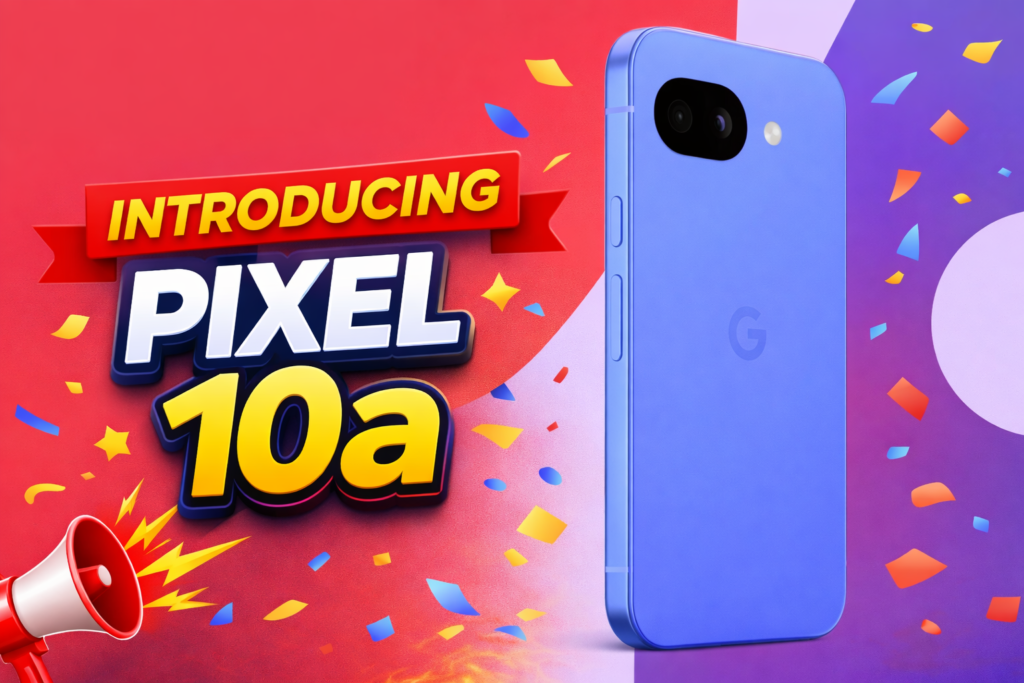

The conversation around Google Pixel 10a vs Pixel 9a has already started, even before the Pixel 10a officially hits stores. That usually happens with Google’s A-series phones. A new model appears, comparisons begin immediately, and buyers wonder if waiting is smarter than buying now.
The upcoming Google Pixel 10a naturally goes up against the still-fresh Google Pixel 9a. The Pixel 9a has not even been on the market long enough to feel old, which makes this comparison more relevant.
This article follows a straightforward approach. Instead of exaggerating improvements or dismissing changes, we’ll look at what realistically differs between the two phones and how those differences affect real users.
If you are deciding between Google Pixel 10a vs Pixel 9a, this detailed breakdown will help you make a practical decision.
Why the Google A-Series Matters
Before comparing Google Pixel 10a vs Pixel 9a directly, it helps to understand why the A-series is important.
Google’s A-series is designed to deliver:
- Clean Android software
- Reliable cameras
- Long software support
- Balanced pricing
It does not try to compete with ultra-premium flagship phones. Instead, it focuses on consistency and longevity. That approach worked well with the Pixel 9a, and early details suggest the Pixel 10a follows the same formula.
The differences between Google Pixel 10a vs Pixel 9a are expected to be incremental rather than dramatic.
Design Comparison: Familiar With Minor Changes
When comparing Google Pixel 10a vs Pixel 9a, design is one of the first visible differences.
The Pixel 9a continues Google’s recognizable horizontal camera bar across the back. It’s distinctive and easy to identify. The design is simple and practical.
The Pixel 10a is expected to move toward a flatter and slightly cleaner camera layout. The adjustment appears subtle rather than dramatic.
Side-by-side, the Pixel 10a may look slightly more modern. However, overall construction, size, and feel are expected to remain similar.
If design freshness matters to you, the Pixel 10a has a small advantage. If you prioritize functionality over appearance, the difference will likely feel minor.
Display: Nearly Identical Specifications
The Google Pixel 10a vs Pixel 9a display comparison shows strong similarity.
Both phones are expected to feature:
- 6.3-inch OLED display
- 120Hz refresh rate
- Similar resolution and aspect ratio
The Pixel 9a already offers smooth scrolling and good color accuracy. The Pixel 10a may introduce slight improvements in peak brightness, but the overall viewing experience should remain comparable.
For streaming, browsing, and daily use, most users will not notice a major difference between the two displays.
If you are choosing based purely on screen quality, both devices perform at a similar level.
Performance: Same Processor, Consistent Output
In the Google Pixel 10a vs Pixel 9a comparison, performance remains steady because both devices use Google’s Tensor G4 processor.
That means:
- Similar multitasking ability
- Comparable gaming performance
- Equivalent AI processing features
- Similar day-to-day responsiveness
The Pixel 9a already handles social media apps, video streaming, and moderate gaming without issue. The Pixel 10a is not expected to introduce a new processor generation, so performance differences should be minimal.
Where the Pixel 10a may feel slightly more refined is software optimization at launch, since it starts on a newer Android version. However, hardware capability remains consistent.
If you already own the Pixel 9a, upgrading solely for performance may not provide noticeable improvement.
Software and Updates: The Clear Advantage
One of the more important distinctions in Google Pixel 10a vs Pixel 9a is software longevity.
- Pixel 9a launched with Android 15.
- Pixel 10a is expected to launch with Android 16.
Because the Pixel 10a begins with a newer Android version, it will likely receive major updates for a longer overall period.
Google has committed to extended software support for Pixel devices. If that continues, the Pixel 10a naturally gains an advantage in long-term usability.
For users who keep their phones for four to five years, this difference matters. For users who upgrade every two years, it may not be a major factor.
Software support is one of the strongest practical reasons to choose the Pixel 10a over the Pixel 9a.
Camera Comparison: Minor Refinements
In the Google Pixel 10a vs Pixel 9a camera comparison, the hardware setup appears largely similar.
The Pixel 9a includes:
- 48MP main camera
- Ultra-wide lens
- Advanced computational photography features
The Pixel 10a is expected to retain the 48MP main sensor while introducing small refinements to processing and possibly slight sensor improvements.
In real-world use, differences may include:
- Slightly improved dynamic range
- Better low-light noise control
- Refined portrait edge detection
However, there is no indication of a dramatic camera overhaul. The Pixel 9a already delivers strong image quality, and the Pixel 10a is expected to build upon that foundation rather than replace it.
If photography is your primary concern, both phones should perform at a comparable level.
Battery Life: Similar Capacity and Usage
Battery capacity for both models is expected to be around 5,100mAh.
The Pixel 9a already delivers reliable all-day battery performance for moderate usage. The Pixel 10a may offer slight efficiency gains through newer Android optimization, but battery size remains similar.
When comparing Google Pixel 10a vs Pixel 9a battery performance, the difference is expected to be minimal.
If battery endurance is a deciding factor, both devices should meet similar expectations.
Pricing in India: A Deciding Factor
Price plays a significant role in the Google Pixel 10a vs Pixel 9a decision.
The Pixel 10a is expected to launch in India around ₹49,999.
The Pixel 9a launched in a similar price bracket but is already available at discounted rates in various markets.
This creates a practical difference:
- Pixel 10a offers longer software support at launch price.
- Pixel 9a may offer comparable hardware at a reduced cost.
For buyers focused on value, the Pixel 9a may represent the better immediate purchase. For those prioritising future software longevity, the Pixel 10a becomes more appealing.
Who Should Choose the Pixel 10a?
The Pixel 10a is a better option if:
- You are buying a new phone and want maximum software lifespan.
- You plan to keep your device for several years.
- You prefer the updated design.
It makes the most sense for new buyers rather than current Pixel 9a owners.
Who Should Choose the Pixel 9a?
The Pixel 9a remains a sensible choice if:
- You already own it.
- You find it at a discounted price.
- You are satisfied with Android 15.
- You prioritize value over small refinements.
There is no major loss in performance or camera quality compared to the Pixel 10a.
Final Conclusion: Google Pixel 10a vs Pixel 9a
When evaluating Google Pixel 10a vs Pixel 9a, the differences are steady but not dramatic.
The Pixel 10a provides:
- Newer Android version
- Longer update window
- Slight design adjustments
The Pixel 9a continues to offer:
- Similar processor performance
- Comparable camera quality
- Reliable battery life
- Potentially better pricing


