
Everything from Google I/O 2026 that you need to know

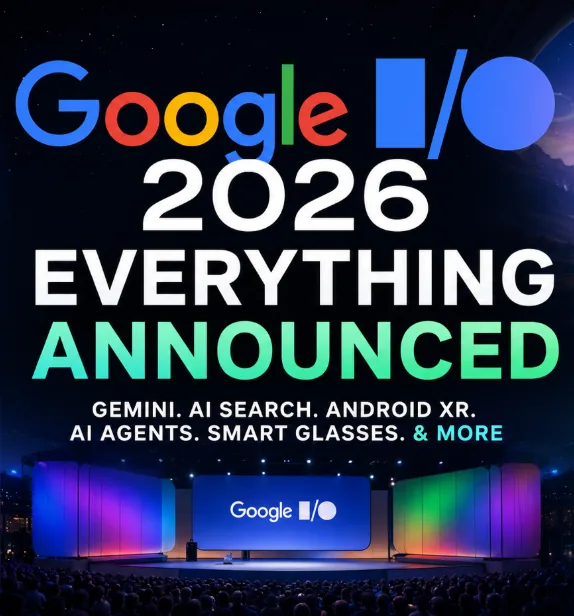
Google I/O has always been one of the biggest events in tech. But this year felt different.
was not just about new apps, software updates, or developer tools. It was Google’s clearest message yet that artificial intelligence is becoming the center of everything the company builds.
Search is changing. Android is changing. Coding is changing. Even the way you interact with devices may soon look completely different.
Throughout the event, one idea appeared again and again:
AI is no longer just a feature. Google wants it to become the interface layer for computing itself.
From powerful new Gemini models to AI-powered Search, Android XR smart glasses, coding tools, and autonomous AI agents, Google showed a future where software becomes more proactive, conversational, and deeply integrated into daily life.
Some of these announcements were exciting. Some were controversial. And some could completely reshape the internet over the next few years.
Here’s everything Google announced at Google I/O 2026 – and why it actually matters to you.
The Biggest Theme of Google I/O 2026: AI Everywhere
If you watched the keynote, one thing became obvious very quickly:
Almost every major announcement revolved around AI.
Not just chatbots.
Not just image generation.
But AI integrated across:
- Search
- Android
- Workspace
- coding tools
- shopping
- wearables
- XR devices
- productivity systems
Google is no longer treating AI as a side feature. Instead, the company is rebuilding its ecosystem around it.
This is an important shift.
In the past, you opened apps and manually searched for information. In Google’s new vision, AI becomes the middle layer between you and the internet itself.
Instead of:
- opening apps one by one
- searching manually
- clicking through multiple websites
- organizing information yourself
AI starts doing more of the work for you.
That is the foundation of what many people now call agentic AI.
And Google made it clear that this is where the company believes computing is heading next.
Gemini Takes Center Stage
Google’s Gemini platform was the star of the event.
Nearly every major product announcement connected back to Gemini in some way.
But this year’s updates were not only about making Gemini smarter. They were about making it more active, more integrated, and more capable of handling real-world tasks.
Gemini Spark and the Rise of AI Agents
One of the biggest announcements was Gemini Spark, Google’s push into AI agents.
Traditional AI chatbots mostly respond to prompts. You ask a question, and the model answers.
AI agents work differently.
Instead of only responding, they can:
- plan tasks
- navigate websites
- organize information
- automate workflows
- interact with apps
- complete multi-step actions
In simple terms, Google wants Gemini to become less like a chatbot and more like a digital assistant that can actually do things for you.
Imagine asking AI to:
- plan a trip
- compare hotel prices
- create a schedule
- book reservations
- summarize documents
- organize your emails
…..all without switching between multiple apps yourself.
That is the direction Google is moving toward.
This also explains why the term “agentic AI” appeared so frequently during the event.
Google clearly sees AI agents as the next major evolution after chatbots.
Why Google Is Betting So Heavily on Agentic AI
The AI race is no longer just about who has the smartest model.
Now it is about:
- ecosystems
- integration
- automation
- productivity
- user retention
Companies like have pushed AI into the mainstream through products like .
Google’s strategy is different.
Instead of building one standalone AI app, Google is embedding AI across:
- Search
- Chrome
- Android
- Gmail
- Docs
- YouTube
- Workspace
The goal is simple:
keep users inside Google’s ecosystem while AI handles more of their digital lives.
That could become incredibly powerful over the next few years.
Gemini Omni and Gemini 3.5 Flash
Google also introduced updates to its AI models, including Gemini Omni and Gemini 3.5 Flash.
These models focus on:
- faster responses
- multimodal abilities
- better reasoning
- improved coding
- lower latency
- real-time interactions
Multimodal AI is becoming especially important.
Instead of only understanding text, these systems can process:
- images
- voice
- video
- documents
- live camera input
This opens the door for more natural interactions with technology.
For users, this could mean:
- smarter assistants
- faster workflows
- better accessibility
- more personalized experiences
For developers, it means AI can now be built into products in far more advanced ways.
Google Search Is Changing Forever
One of the most important parts of Google I/O 2026 was the company’s vision for the future of Search.
And honestly, this could end up becoming the most impactful announcement from the entire event.
AI Mode and the Biggest Search Upgrade in 25 Years
Google described its AI-powered Search overhaul as the biggest upgrade to Search in 25 years.
That statement alone shows how serious this shift is.
Instead of showing mostly blue links, Google’s new AI Search experience focuses heavily on:
- AI-generated summaries
- conversational responses
- contextual understanding
- follow-up questions
- personalized assistance
This changes how people interact with the web.
Instead of:
- searching
- opening multiple websites
- comparing information manually
users increasingly receive direct answers from AI itself.
That may sound convenient.
But it also raises major questions about the future of the internet.
The Shift From “Links” to “Answers”
For years, the internet worked on a simple system:
websites created content, and Search sent users to those websites.
AI Search changes that model.
Now the AI often summarizes information directly on the results page.
That means fewer clicks.
Fewer visits.
And potentially less traffic for publishers, bloggers, and creators.
This shift is already creating concern across the tech industry.
Some experts are calling it:
- “Google Zero”
- the zero-click internet
- the post-search web
The fear is that AI-generated answers could slowly reduce the visibility of independent websites.
At the same time, users may benefit from:
- faster answers
- better summaries
- less time searching
- more conversational experiences
So the future of Search is becoming a balance between convenience and the health of the open web.
What This Means for SEO, Websites and Creators
If you run a website, create content, or work in SEO, this shift matters a lot.
The old SEO strategy focused heavily on ranking pages and earning clicks.
Now, AI systems increasingly summarize content directly.
That means generic content may struggle more than ever.
But this does not mean SEO is dead.
Instead, the internet may start rewarding:
- unique insights
- firsthand experience
- deep analysis
- strong authority
- original reporting
- trustworthy expertise
In other words, simply rewriting existing information may become far less valuable.
That is one reason thoughtful, high-quality content could become even more important moving forward.
Android XR and Google’s Smart Glasses Push
Another major focus at Google I/O 2026 was XR technology.
XR stands for:
- virtual reality (VR)
- augmented reality (AR)
- mixed reality (MR)
Google’s new platform, Android XR, is designed to power future wearable and immersive devices.
And yes – smart glasses are back again.
Android XR Explained
Google wants Android XR to become the operating system for future spatial computing devices.
This includes:
- smart glasses
- immersive headsets
- AI-assisted wearables
- mixed reality interfaces
The difference this time is AI.
Earlier smart glasses often failed because they lacked practical usefulness.
But combining XR with modern AI changes things dramatically.
Now AI can:
- identify objects in real time
- translate conversations
- summarize surroundings
- provide live assistance
- answer questions contextually
This makes wearable devices far more useful than earlier generations.
Smart Glasses Are Back – But This Time With AI
Smart glasses have existed for years.
But most people remember earlier attempts like failing to become mainstream.
The problem was simple:
the technology felt ahead of its time.
Now things may be different.
AI gives these devices a real purpose.
Imagine glasses that can:
- translate signs instantly
- guide navigation
- summarize meetings
- identify products
- provide contextual information
- act as a real-time assistant
That makes the experience much more practical.
Still, challenges remain:
- battery life
- privacy concerns
- pricing
- social acceptance
So while the future looks promising, mass adoption may still take time.
Could XR Finally Go Mainstream?
This is one of the biggest questions in tech right now.
The combination of AI + wearable computing could finally make these devices useful enough for mainstream users.
If that happens, smartphones may slowly stop being the center of computing.
That transition may not happen immediately.
But Google clearly believes it is coming.
AI Coding and the Future of Software Development
AI coding tools were another major focus during the event.
And this is one of the areas that could affect millions of students, developers, and tech workers directly.
Google’s Push Into AI-Assisted Development
Google introduced new AI-powered developer tools focused on:
- code generation
- app building
- debugging
- workflow automation
- rapid prototyping
The company is clearly investing heavily in AI-assisted software development.
This trend is already transforming how many developers work.
Instead of writing every line manually, developers increasingly:
- guide AI systems
- refine outputs
- review generated code
- focus more on architecture and problem solving
That changes the role of software engineering itself.
The Rise of “Vibe Coding”
One of the biggest trends in tech right now is something people casually call “vibe coding.”
This refers to building apps and software by:
- describing ideas in natural language
- using AI-generated code
- iterating quickly with AI assistance
Tools powered by AI are making software development more accessible than ever before.
For beginners, this lowers barriers.
For experienced developers, it increases speed and productivity.
But it also creates new challenges:
- debugging AI-generated code
- maintaining quality
- security risks
- overdependence on automation
So while AI coding tools are powerful, human understanding still matters deeply.
Will AI Replace Software Engineers?
This question appeared repeatedly after the event.
The honest answer is more complicated than simple headlines suggest.
AI will likely automate:
- repetitive coding
- boilerplate generation
- simple debugging
- documentation tasks
But software engineering involves much more than writing syntax.
Developers still need:
- system design
- problem solving
- architecture thinking
- communication
- creativity
- decision-making
The role is changing.
Not disappearing.
In many ways, developers may become more like:
- AI-guided builders
- system orchestrators
- product thinkers
rather than only manual coders.
What Google I/O 2026 Means for Students, Developers and Creators
This event was not just about products.
It was also a preview of how work and digital skills are changing.
And if you are a student, creator, or tech enthusiast, these shifts matter directly to you.
Skills That May Become More Valuable
As AI automates repetitive tasks, certain skills become even more important.
These include:
- critical thinking
- creativity
- communication
- system design
- AI workflow understanding
- problem solving
- domain expertise
People who can combine technical knowledge with human judgment may have a major advantage.
Skills That Are Becoming More Automated
AI is increasingly capable of handling:
- repetitive coding
- basic writing
- information summarization
- simple research tasks
- routine workflows
That means relying only on basic digital skills may become riskier over time.
Adaptability will matter more than ever.
How You Can Adapt to the AI Era
The good news is that AI can also become a powerful tool for learning and growth.
Instead of fearing AI completely, many people will benefit more from learning how to work alongside it.
Some practical ways to adapt include:
- learning AI tools early
- building real projects
- developing strong fundamentals
- improving communication skills
- focusing on creativity and analysis
- staying curious about new technology
The people who understand both technology and human needs may be the ones who thrive most in the coming years.
Not Everyone Was Impressed
Even though Google I/O 2026 generated massive attention, not every reaction was positive.
And understanding the criticism is important too.
The Growing AI Fatigue Problem
Many viewers felt the event was overwhelmingly focused on AI.
Some people argued that:
- every company now sounds similar
- innovation feels repetitive
- AI is being added everywhere regardless of necessity
Others missed the excitement of earlier tech eras where hardware, creativity, and experimental products played a larger role.
This growing “AI fatigue” is becoming noticeable across the industry.
People are excited about AI but also overwhelmed by it.
Concerns Around Privacy, Dependence and the Open Web
The future Google presented also raises difficult questions.
For example:
- How much data will AI systems require?
- Will users become too dependent on AI?
- What happens to independent websites?
- Can AI-generated answers spread misinformation?
- Who controls these AI ecosystems?
These are not small concerns.
As AI becomes more deeply integrated into daily life, debates around ethics, privacy, and internet openness will likely become even more important.
The Bigger Picture: Google Wants AI To Become the Interface for Everything
This may be the single most important takeaway from Google I/O 2026.
Google is no longer simply adding AI to existing products.
Instead, the company appears to be rebuilding its ecosystem around AI itself.
Across:
- Search
- Android
- Chrome
- Workspace
- XR
- productivity tools
- coding systems
AI is becoming:
- the assistant
- the interaction layer
- the workflow manager
- the interface between users and information
That is a massive shift.
It suggests a future where:
- apps become less central
- conversations replace traditional interfaces
- AI handles more decisions automatically
- computing becomes proactive instead of reactive
In many ways, Google I/O 2026 may eventually be remembered as the moment Google stopped treating AI as a feature and started treating it as the foundation of its future.
Final Thoughts: The Beginning of Google’s AI-First Future
Google I/O 2026 was more than a product showcase.
It was a glimpse into how one of the world’s biggest technology companies believes the future of computing will work.
The event showed:
- AI-powered Search
- autonomous AI agents
- smarter Gemini models
- AI-assisted coding
- XR platforms
- wearable computing ambitions
But more importantly, it revealed a larger strategy.
Google wants AI integrated into nearly every digital experience.
Whether that future becomes empowering, overwhelming, or somewhere in between will depend on how these technologies evolve and how society chooses to use them.
What is clear, however, is this:
The AI-first era is no longer approaching.
It has already begun.
Read next

Flipkart vs Amazon: The Better Phone Sale for Your Money?
Amazon's sale starts 8 Oct, Flipkart's 9 Oct. Compare the Big Billion Days vs Great Indian Festival bank offers and phone deals before you buy.
The Surprising Reasons Smartphone Prices Are Surging in 2026
Smartphone prices rising in 2026 is no accident. Memory chips now cost four times more, driven by AI. Here's what it means for buyers in India.
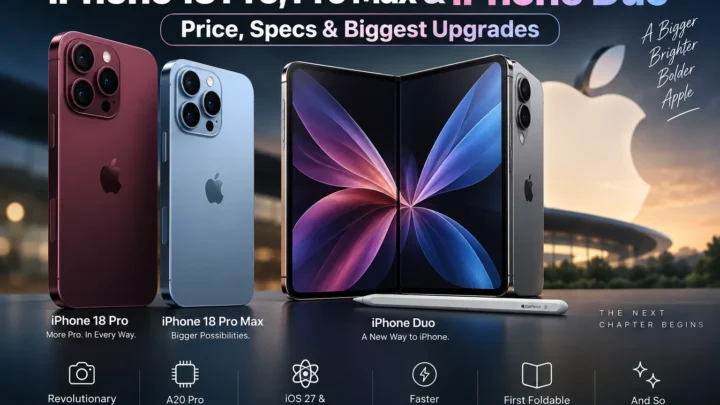
iPhone 18 Pro, Pro Max & Duo: What’s New?
Apple appears to be preparing one of its biggest iPhone launches yet, with the iPhone 18 Pro, iPhone 18 Pro Max and the new iPhone Duo…